

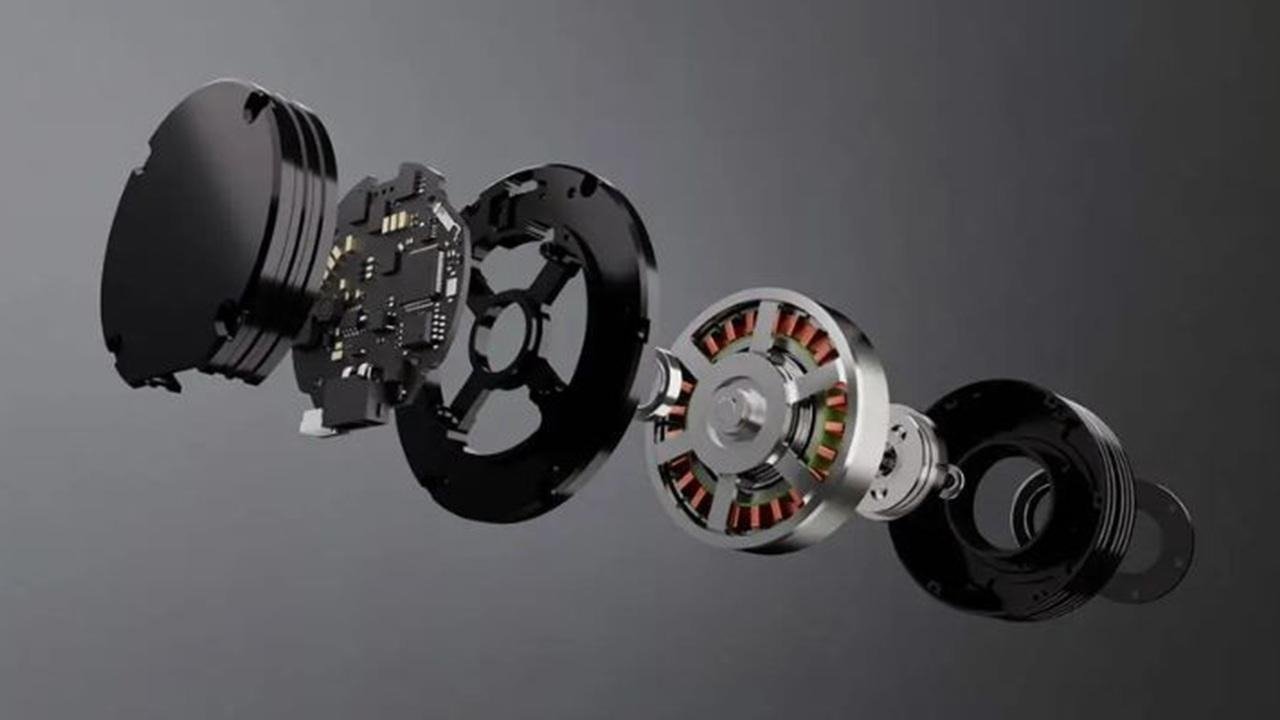
Surgical systems, rehabilitation, exoskeletons and diagnostics have been added to medical robotics with small high-performance motors. The choice of the appropriate motor will depend on the density of the torque, accuracy, thermal characteristics, safety, and integration flexibility. Conveyors, pumps and automation are operated using traditional industrial motors. Medical robotics must have attributes such as smooth movement, accurate placement, and predictable behavior, particularly around patients and clinicians. The next sections highlight key evaluation features for the Medical Robot Motor.
High Torque Density in a Compact Form
There is no space in surgical arms, rehab joints and medical platforms. High-torque motors may be too large to design and may be bulky. Small joints need not have big gear stages since they can generate adequate power using torque density, a ratio of torque to size and weight. It is essential in wearable rehab robots as well as surgical wrists, where weight has an effect on ergonomics. Traditional motors require high gear ratios or large housings to supply the torque. Quasi-direct drive systems utilize a planetary gearbox and a brushless motor to achieve a small-sized yet powerful output, the best solution for medical equipment without compromising power.
Low Backlash for Precise Positioning
The small mechanical gap between the teeth of a gear is referred to as backlash. Even a slight backlash in medical robotics may damage positioning accuracy and lead to motion artifacts. Robotic surgery requires high precision in control of the tools, and robots used in rehabilitation should have the ability to control the movement of patients with a controlled level of resistance. Planetary gears with low backlash lower the spacing and enhance uniform motion. Installed motor-gear systems reduce alignment problems and slackness, giving reduced control and better response. This accuracy increases medical safety and reliability.
High-Resolution Feedback Systems
The correct motion control depends on the explicit feedback of the high-resolution encoders in medical robot motors that monitor position and velocity. Dual encoders are used to provide feedback on both motor and output sides, which provides fault-detection functions and improved calibration. Discrepancies signal irregularities early. In rehab devices, feedback ensures accurate force and motion; in surgical robots, encoder resolution affects tool positioning. Integrated feedback systems reduce complexity compared to external sensors.
Advanced Control Compatibility
Modern medical robots use multi-loop control strategies with motors supporting servo, torque, and velocity modes based on tasks. These motors operate using real-time systems and sophisticated driver boards. Cascaded control loops allow the fine control of current, velocity, and position, which is vital in finely tuning the force. Robotics-specific motors have a communication protocol and sensors built in, unlike traditional industrial motors, which may require extra tuning or additional parts, which makes commissioning the motor much easier and improves its performance.
Thermal Monitoring and Heat Management
Medical robots are continuous, which can lead to the accumulation of heat and decrease the efficiency of the motor, damage the insulation and affect the durability. Windings and electronics have thermal sensors that are used to provide real-time information, allowing the system to reduce torque or shut down where needed. Medical robotics must have very small thermal management inside small enclosures, unlike traditional motors, where airflow is abundant to ensure safety and functionality.
Smooth and Low-Noise Operation
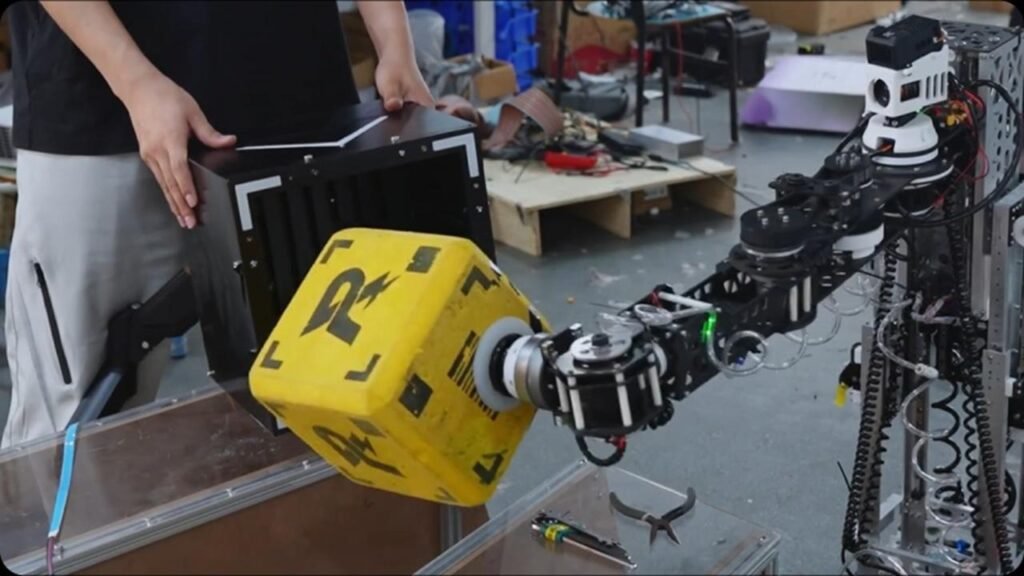
There must be quietness in the operation of hospitals and clinical settings. Noise or vibration may be excessive enough to disturb the patients and lower the perception of quality in the system. Low cogging torque and the refined commutation add smooth motion. Field-oriented control methods enable stable torque delivery and minimize ripple. A well-designed planetary gearbox further reduces vibration through uniform load distribution. Heavy machinery industrial motors are not necessarily focused on acoustic performance. Robot motors used in medicine need to overcome the trade-off between torque density and low-noise properties to achieve clinical requirements.
Lightweight Construction for Ergonomic Systems
Weight plays a central role in wearable robotics and mobile medical devices. Heavy actuators increase inertia, which can reduce responsiveness and raise power consumption. Compact quasi-direct drive motor designs eliminate unnecessary structural mass by integrating the motor and gearbox into a single housing. This reduces the need for external couplings and brackets. In rehabilitation, exoskeletons with more actuator weight lower the strain and enhance patient comfort. In mobile diagnostic systems, reduced-weight drive systems will lead to increased battery life and better maneuverability.
Safety Features and Redundant Protection
Safety in medical robotics requires motors with overload protection, overcurrent monitoring, and controlled braking to prevent mechanical stress and ensure safety. Redundant feedback cross-verifies data, and in patient devices, these protections are crucial for compliance. Unlike industrial motors needing external safety, medical motors embed safety functions in the design.
Modular Integration and Flexible Mounting
Medical device designers often work within strict spatial constraints. A motor that supports modular mounting configurations simplifies integration into complex assemblies. Installation is made easier by the use of bidirectional mounting, small cable routing and built-in connectors. Modular motor families allow the engineers to scale the torque without having to redesign the whole mechanical system. Individual motors and gearboxes may complicate the alignments and prolong the time of assembly. Integrated designs simplify installation and decrease failure risk points.
Reliability and Long-Term Durability
The medical equipment should perform with a high degree of reliability for long periods with limited breakdowns due to wear, electrical problems, and faults. The durability is improved through the use of high-quality components such as bearings, planetary gears and durable housings. Diagnostic tools monitor voltage, current, and communication for maintenance. Unlike general motors, medical robot motors have stricter tolerances and monitoring for continuous, safe operation.
Scalability Across Medical Applications
A versatile medical robot motor should support multiple use cases, from surgical arms to rehabilitation platforms and assistive mobility systems. Scalable torque ranges, adaptable control modes, and consistent communication interfaces allow engineers to use a unified motor platform across different products. This saves on development time and eases supply chains. In the emerging industries like wearable robotics and robotic-assisted healthcare, uniform but high-performance actuator platforms have technical and commercial benefits.
Conclusion
When selecting a medical robot motor, one must consider the density of torque, backlash, feedback, control, thermal, acoustic, safety, and modular characteristics that are critical in a surgical, rehabilitation, and mobility application. Industrial motors are adapted to automation, whereas medical robotics requires size, accuracy, smoothness, and protection. The actuators available are quasi-direct drive and high-torque actuators that provide small controlled movement. With the increasing demand in medical robotics in the field of surgery, therapy, diagnostics and wear, special motors are needed. A good motor moves mechanisms and ensures safe, precise patient interactions in reliable environments.
